How a 36-Month “Adoption” is Revolutionizing Tree Plantation Drives
We’ve all seen the typical tree plantation drives: photos are snapped, saplings are put in the ground, and everyone goes home. But a few months later, how many of those saplings are still alive? The harsh reality is that survival rates for mass plantations are often discouragingly low.
Enter the Kusmadi Pattern.
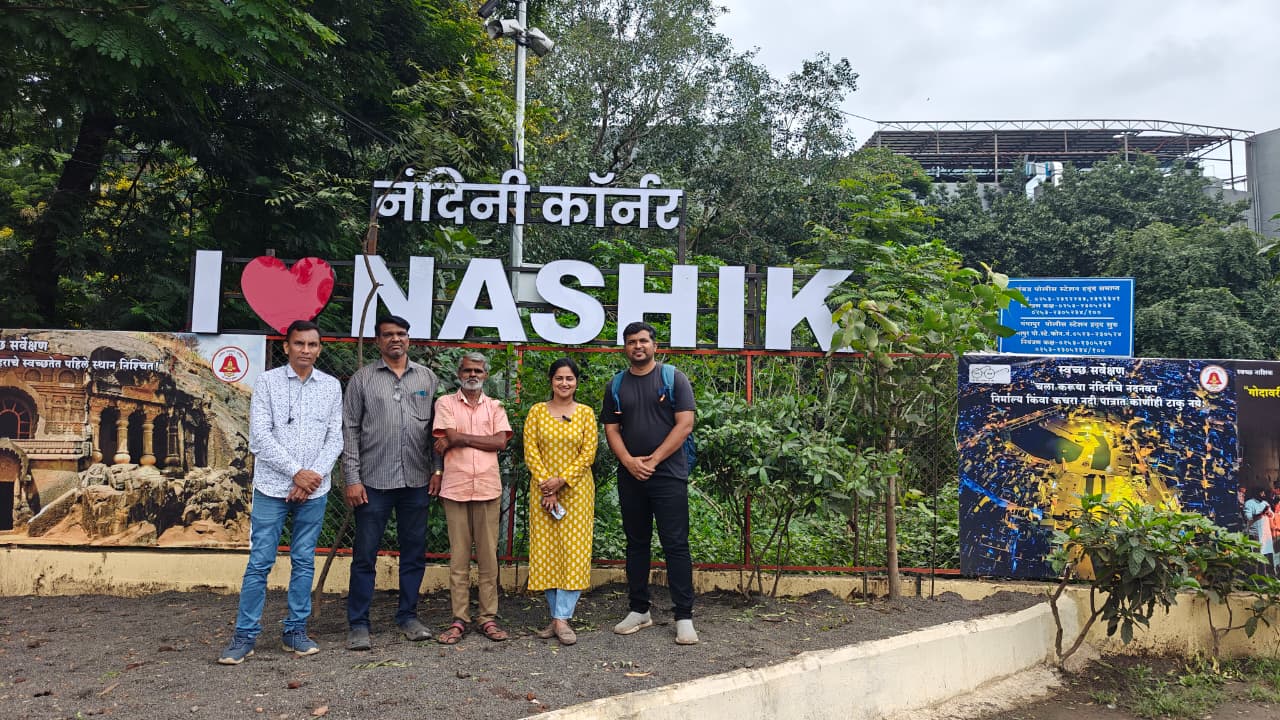
Originating from Nashik, Maharashtra, and spearheaded by Manoj Sathe of the Vijayshree Seva Sanstha, this method is flipping the script on conservation. Instead of “plant and forget,” the Kusmadi Pattern demands a commitment to “adopt and nurture.”
Here is a deep dive into this revolutionary method that is claiming a near 100% survival rate for new trees.
What is the Kusmadi Pattern?
Named after the region where it was developed, the Kusmadi Pattern is a scientific and community-driven approach to afforestation. The core philosophy is simple but profound: Do not plant a baby sapling in the wild; raise it until it is a self-sufficient “adult” tree first.
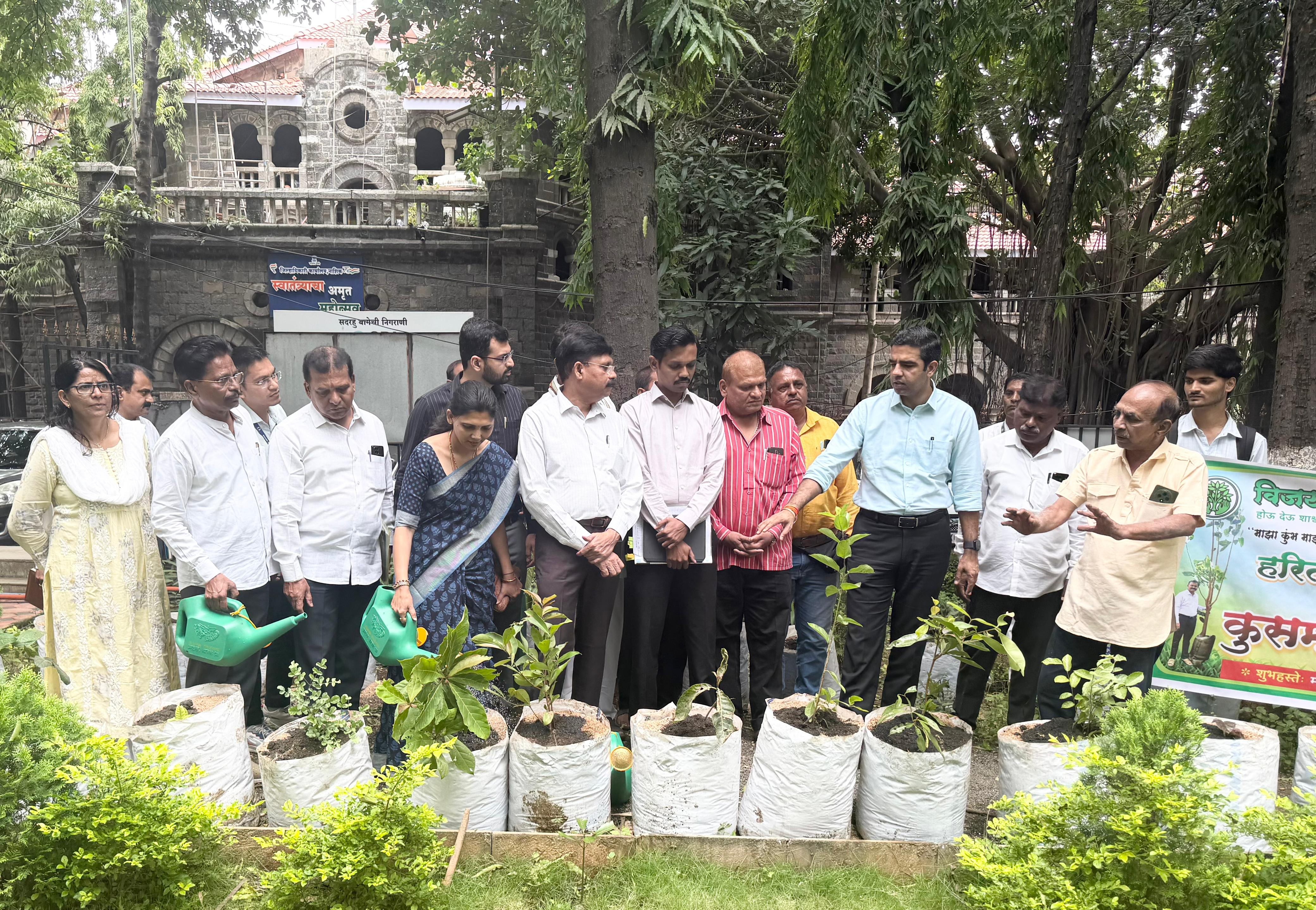
The method was brought into the spotlight during the Harit Kumbh launch—a green initiative often associated with the Kumbh Mela in Nashik—aiming to involve every individual in nature conservation as a personal responsibility.
The 4-Step Process to Success
The Kusmadi Pattern distinguishes itself through a rigorous 36-month timeline before the tree ever touches open ground.
1. Indigenous Seed Collection & Plastic-Free Germination
The process begins with collecting seeds, specifically focusing on rare and indigenous species that are native to the Indian landscape.
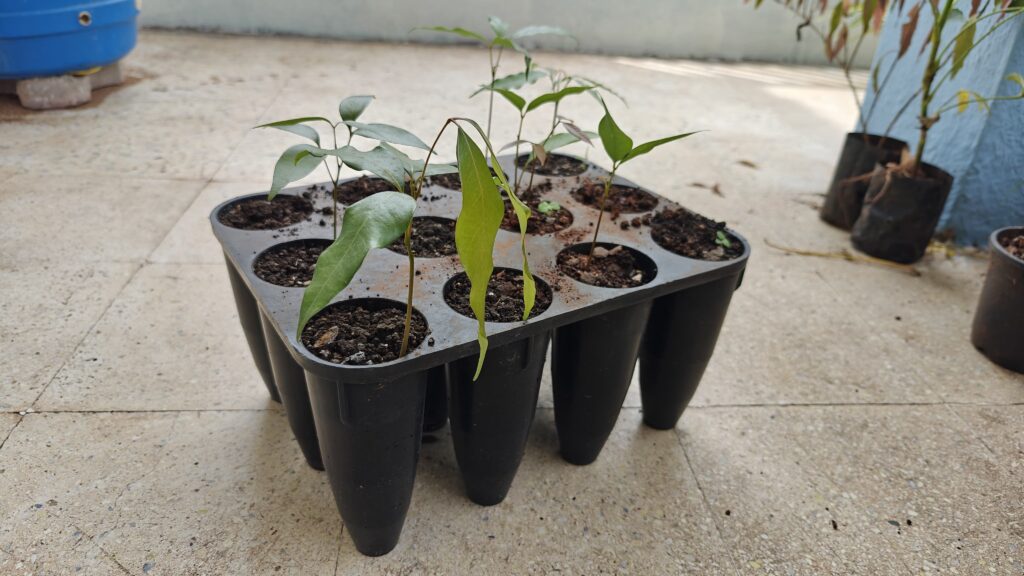
- Innovation: Unlike standard nurseries that use black plastic bags, this method uses special, plastic-free germination trays.
- Root Health: The trays have a conical shape that promotes healthy, downward root growth rather than root spiraling.
- Duration: The saplings stay in these trays for 3-4 months to build a strong foundation.
2. The “Magic” Growth Bag
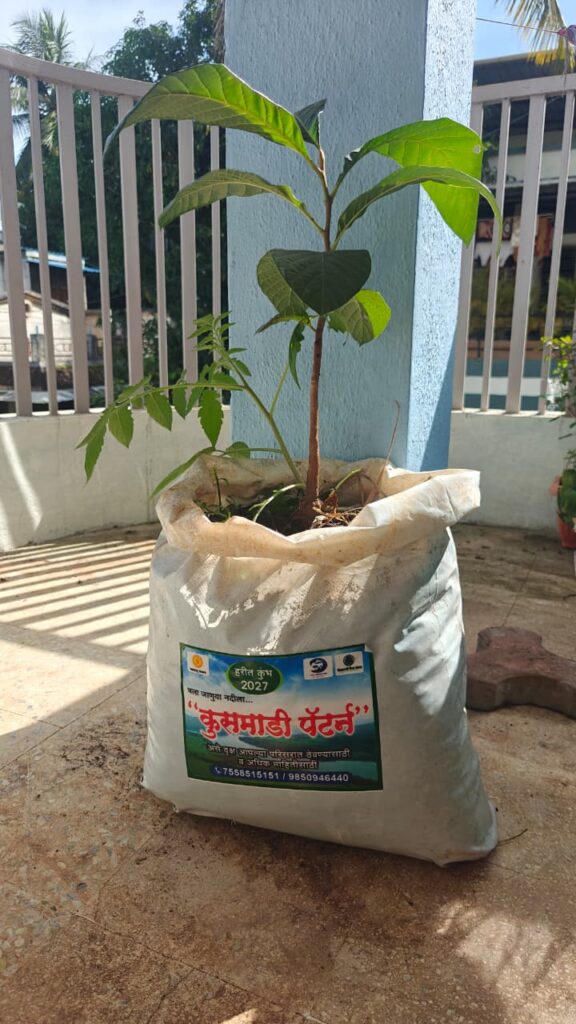
This is the game-changer. After the initial germination, the saplings are not planted in the ground. Instead, they are transferred to large, knee-high bags (approx. 3 feet tall).
- The Soil Mix: The bags are filled with a nutrient-dense mixture comprising 40% soil and 60% special compost mix.
- Nutrient Load: The compost mix is reported to contain 18 different types of organic fertilizers/compost, providing all the necessary nutrients for robust growth without the need for chemical additives.
3. The 36-Month “Home Stay”
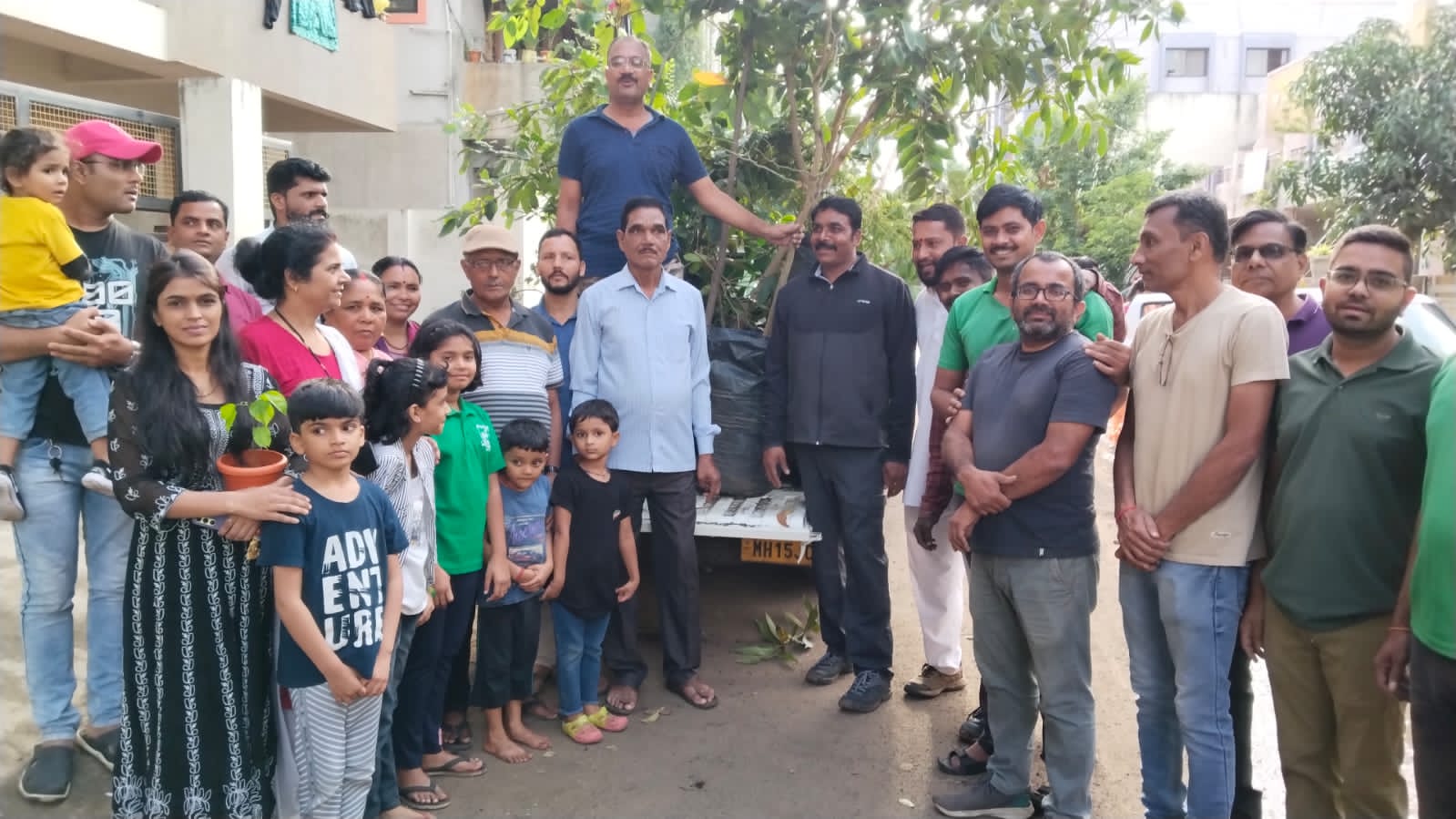
Here is where the community involvement kicks in. These large bags are distributed to citizens—families, offices, and societies—to keep in their homes, balconies, or compounds.
- The Commitment: The “foster parents” agree to look after the tree for 36 months (3 years).
- Low Maintenance: Because the soil mix is so rich, the trees require no external fertilizers. The families only need to provide regular watering.
- Goal: The aim is to let the trunk thicken and the root system mature within the safety of the bag.
4. The Final Plantation
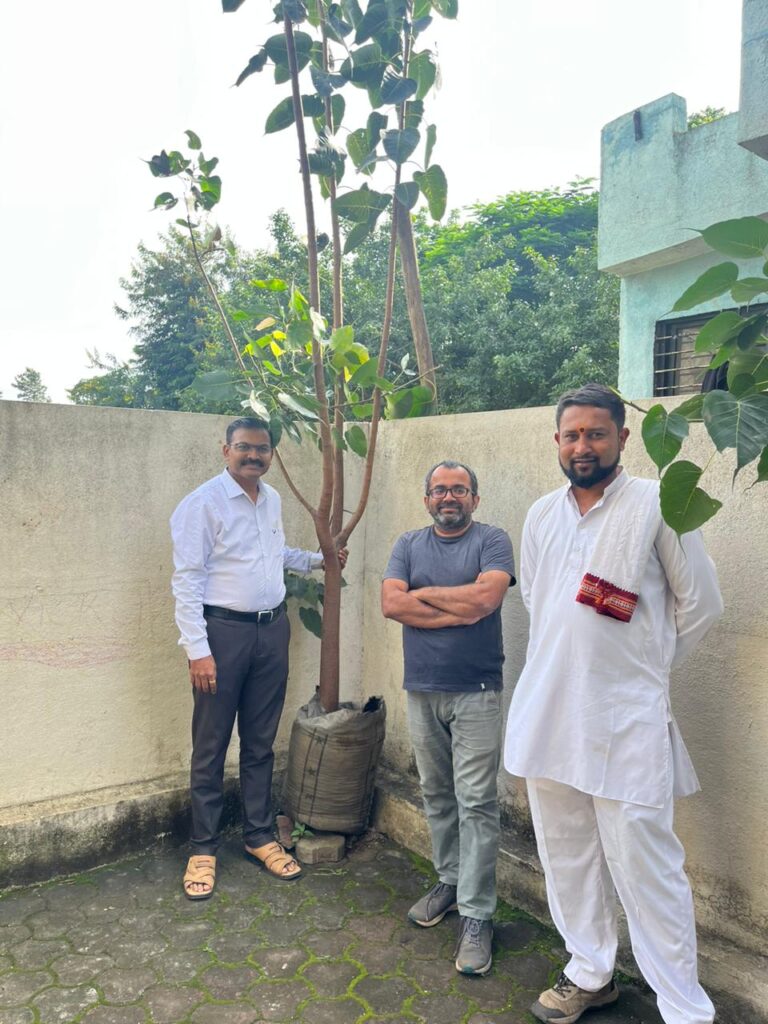
After 3 years, the sapling is no longer a fragile “baby.” It is a resilient, 3-to-4-foot tall tree with a thick trunk.
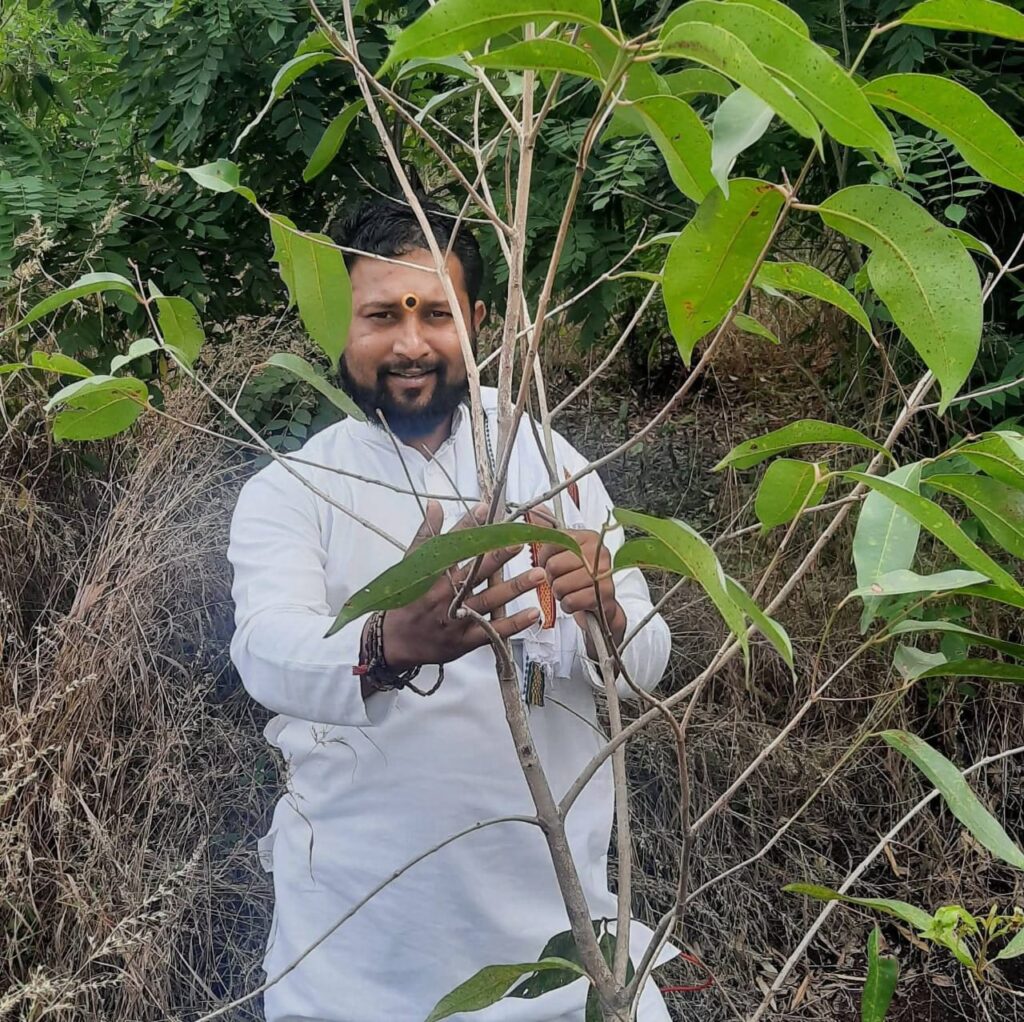
- Survival: When these trees are finally planted in the ground (forests, hills, or roadsides), they are self-sufficient.
- Watering: Post-plantation, they reportedly need watering only 5 to 7 times to settle in, after which they can survive on their own.
Why It Works: The “Akshay Vruksha” Philosophy
The initiative has been described as the “Akshay Vruksha Abhiyan” (Eternal Tree Campaign). The success of the Kusmadi Pattern relies on two main pillars:
- Biological Resilience: By planting an older tree (3+ years), it is less susceptible to grazing animals, harsh weather, and neglect compared to a 3-month-old sapling.
- Emotional Connection: When a family keeps a tree in their home for three years, it becomes like a family member. As Manoj Sathe puts it, this builds an “unbreakable bond between the family and nature”.
Success Stories & Community Support
The movement has seen massive support in Nashik. Prominent figures, including the Municipal Commissioner and local collectors, have endorsed the method.
- Rotary Club of Ambad & Divya Marathi: These organizations have partnered with Vijayshree Seva Sanstha to scale the project, with housing societies like “Anmol Nayantara” adopting hundreds of trees at once.
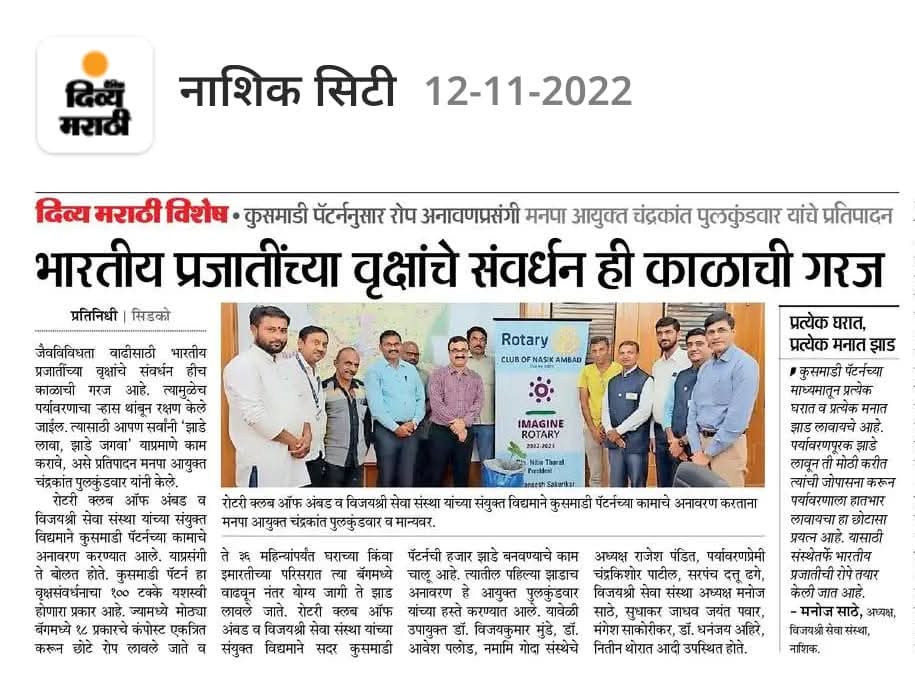
- Government Adoption: The Nashik Collectorate even launched a drive where employees adopted trees to nurture within the office premises.
Conclusion
The Kusmadi Pattern proves that tree plantation shouldn’t be a one-day event; it should be a long-term relationship. By combining indigenous biodiversity, specialized nutrition, and community care, Manoj Sathe and his team are turning Nashik green—one healthy, 3-year-old tree at a time.
Want to learn more? You can connect with Vijayshree Seva Sanstha and Mr. Manoj Sathe to find out how to adopt a tree or support the movement.
- Contact: +91 7558515151
- Location: Nashik, Maharashtra